

Can Landlords Require Renters Insurance?
September 12, 2026
Named Peril Versus Open Peril for Homeowners
September 16, 2026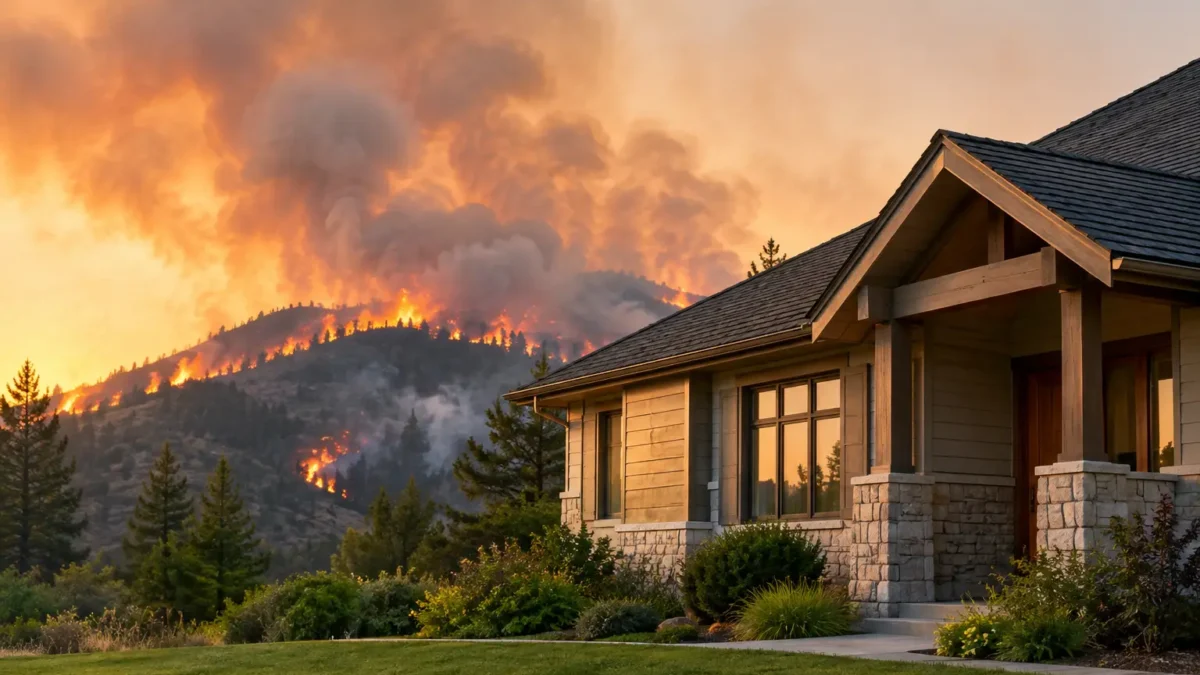
A home can be miles from a forest and still face wildfire exposure. Wind-carried embers can travel far ahead of a fire line, landing on roofs, decks, vents, fences, and dry landscaping. For homeowners, wildfire insurance is less often a separate policy than a question of whether a homeowners policy is available, how much protection it provides, and what must be done to keep that protection in place.
For buyers, owners, landlords, and condo residents in higher-risk areas, the right time to review this issue is before a purchase closes or a renewal notice arrives. Coverage choices become much harder when a property is already facing restricted carrier availability.
What wildfire insurance usually means
In most cases, fire damage is included under a standard homeowners policy. If a wildfire causes covered damage to the home, attached structures, detached structures, personal belongings, or makes the residence temporarily unlivable, the policy may provide protection up to its stated limits and subject to its deductible and terms.
That does not mean every homeowner has the same wildfire protection. Availability, underwriting guidelines, deductible options, coverage limits, and required property improvements can vary significantly by carrier and location. A home with dense vegetation, limited road access, a combustible roof, or a history of nearby fires may be reviewed more closely than a similar home in a lower-risk neighborhood.
For condo owners, the association’s master policy generally protects portions of the building described in the association documents, while an individual condo policy can help protect interior improvements, personal property, additional living expenses, and personal liability. Renters do not insure the building itself, but renters insurance can protect eligible belongings and provide additional living expense coverage after a covered fire. Landlords need a dwelling fire or landlord policy designed for a rental property rather than a policy intended for an owner-occupied home.
The coverage amounts that matter after a wildfire
The most useful wildfire review starts with the structure limit, not just the premium. Your dwelling limit should reflect what it could cost to rebuild the home now, using local labor and materials, after a widespread fire event. Rebuilding costs can rise quickly when many homes in the same area need contractors and supplies at once.
Replacement cost coverage can be especially valuable because it is designed around the cost to repair or rebuild with comparable materials, subject to policy conditions and limits. Actual cash value coverage factors in depreciation, which can leave a much larger out-of-pocket gap. The distinction matters for a roof, flooring, cabinetry, appliances, and personal belongings.
Ask how the policy handles these related protections:
- Other structures: Detached garages, sheds, fences, and similar structures may have a separate limit, often based on a percentage of the dwelling amount.
- Personal property: Furniture, clothing, electronics, tools, and household items need a realistic limit. A home inventory, photos, and receipts can make it easier to document what was owned.
- Additional living expenses: If a covered fire makes the residence unlivable, this coverage may help with reasonable temporary housing, meals above normal costs, and other eligible expenses within the policy limit.
- Building ordinance or law coverage: Rebuilding may require upgrades to meet current codes. Basic limits can be modest, so this is worth reviewing in areas with older homes.
- Extended or guaranteed replacement features: Some policies offer additional rebuilding protection above the dwelling limit under defined conditions. Availability and terms differ, but this feature can be meaningful where construction costs are volatile.
Personal liability is also part of many homeowners policies, although it addresses a different risk than fire damage. An umbrella policy may be worth discussing for households with significant assets, rental property, or higher liability exposure.
Why a standard policy may still leave gaps
A homeowners policy is not a guarantee that every expense connected to a wildfire will be paid. Coverage depends on the policy language, the cause of damage, limits, deductibles, exclusions, and whether the home was insured accurately.
For example, a dwelling limit set years ago may no longer match local rebuilding costs. A detached workshop filled with equipment may exceed the other-structures limit. Jewelry, art, firearms, collectibles, and business property kept at home can have special limits or require separate scheduling. Flooding, earth movement, and earthquake damage are typically separate issues, even when they occur after a fire or as part of a broader disaster.
Vacancy can matter, too. A second home or rental property that sits empty for an extended period may have different requirements or restrictions. Owners should also make sure the policy reflects the actual use of the property. A home rented out full time, listed for short-term stays, or held in a trust can require a different policy design than a primary residence.
Wildfire insurance availability and state options
In wildfire-prone regions, some carriers limit new business, reduce the areas where they write policies, or require property-specific mitigation before offering coverage. A nonrenewal notice or a higher premium can feel abrupt, but it is also a signal to begin reviewing alternatives promptly.
The available path depends on the state, the property, and the current insurance market. In some locations, a state-backed residual market program, often called a FAIR Plan, may provide basic fire protection when private-market options are limited. These plans can be an essential safety net, but they may offer narrower coverage than a comprehensive homeowners policy. A separate difference-in-conditions policy may be needed to address gaps such as liability, water damage, theft, or additional living expenses.
This is where independent guidance can help. Comparing only the dwelling limit or monthly payment can miss material differences in deductibles, personal property protection, and whether the policy meets a lender’s requirements. A licensed advisor can help evaluate available options and explain what each one is designed to cover.
Steps that can strengthen your insurability
Mitigation does not guarantee eligibility or a lower premium, but it can improve a home’s defensible space and reduce the chance that embers find an easy ignition point. Start with the work that has the most direct connection to the home itself.
Keep roofs and gutters clear of leaves and debris. Move firewood, lumber, propane tanks, and other combustible materials away from the structure. Trim vegetation near the home, remove dead plants, and maintain separation between trees, shrubs, and buildings where practical. Cover or improve vulnerable vents with ember-resistant materials, and consider ignition-resistant roofing, siding, decking, and fencing when replacing exterior components.
Access also matters. Clearly visible house numbers, maintained driveways, and adequate clearance for emergency equipment can be part of a property’s risk profile. Before making expensive upgrades, ask what a carrier is likely to recognize and retain photos, receipts, inspection reports, and contractor documentation.
How to review your policy before fire season
A focused annual review is more useful than waiting for a problem. Confirm the home is insured for its current rebuilding value, particularly after remodeling, additions, or major upgrades. Review the deductible in dollar terms, not just as a percentage. A percentage deductible can create a substantial out-of-pocket expense on a higher-value home.
Update the insurer when occupancy changes, a home becomes a rental, or substantial renovations begin. Keep a digital home inventory stored away from the property, and include exterior features, major purchases, and serial numbers when available. For rental homes, revisit loss-of-rents protection and make sure the policy reflects the rental arrangement.
If you are buying or refinancing, begin the insurance conversation early. Some properties need more time for inspections, mitigation review, or placement with a specialized carrier. HDA Insurance Brokerage can help homeowners and property owners compare tailored options, evaluate coverage gaps, and obtain the proof of coverage needed for a transaction.
Wildfire risk deserves a practical response, not a rushed one. A policy review, realistic rebuild estimate, and a few well-chosen mitigation improvements can put you in a far stronger position before smoke is on the horizon.
