

Flood Coverage Differences That Affect Protection
August 27, 2026
Mold Damage Coverage: What Homeowners Need to Know
August 31, 2026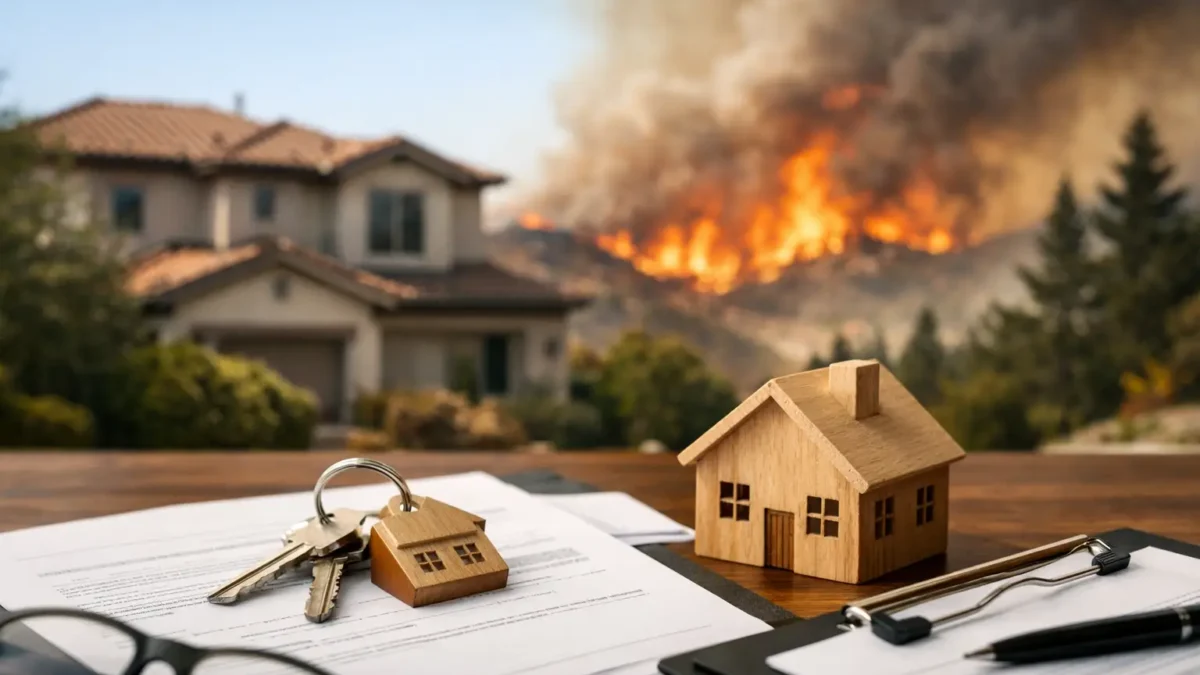
A California wildfire insurance guide should start with a hard truth: the policy that satisfied your lender when you bought your home may not provide the protection you expect after years of rising construction costs, carrier changes, and growing wildfire exposure. California homeowners need to look beyond the premium and confirm how their home, belongings, temporary living costs, and liability are actually protected.
Wildfire insurance is not usually a separate policy. For many homeowners, fire damage is included within a standard homeowners policy. The challenge is finding available coverage in a high-risk area, understanding the limits and exclusions, and building a policy that is practical for your property and budget.
California Wildfire Insurance Guide: Start With Your Property Risk
Insurers evaluate more than a ZIP code. They may consider the home’s distance from vegetation, slope and access roads, nearby fire protection, roof material, local wildfire history, and the condition of the property itself. A home in a designated high-fire-risk area may have fewer carrier options, but homeowners outside those areas can also face nonrenewals, higher deductibles, or tighter underwriting.
That does not mean every homeowner needs the same solution. A newer home with a Class A fire-rated roof and defensible space may present differently from an older cabin surrounded by dense brush. The right approach is to review the individual property, then compare available coverage options rather than assuming one carrier or policy type will fit every situation.
If you are buying, refinancing, or acquiring a rental home, start early. Insurance availability can affect closing timelines, lender approval, and your overall ownership costs. A quick quote is helpful, but a complete review is more valuable when wildfire exposure is part of the picture.
What a Homeowners Policy May Cover After a Wildfire
A homeowners policy typically includes several separate coverage sections. Each has its own limit, deductible, and conditions. Fire can affect all of them at once, which is why choosing limits carefully matters.
Dwelling coverage
Dwelling coverage is the amount available to repair or rebuild the insured structure. It should reflect the estimated cost to reconstruct the home, not its purchase price, outstanding mortgage balance, or current real estate value. Those figures can be dramatically different in California.
Rebuilding after a major fire can be especially expensive. Demand for labor and materials may rise across an affected region, while local code requirements can add costs during reconstruction. Ask whether the policy includes extended replacement cost, guaranteed replacement cost where available, or ordinance and law coverage. These features can help when the cost to rebuild exceeds the base dwelling limit, but availability and terms vary by carrier.
Detached structures such as garages, fences, sheds, and guest units may fall under a separate other-structures limit. If you have a valuable detached building or extensive hardscaping, the default percentage may not be enough.
Personal property and temporary living expenses
Personal property coverage helps protect belongings inside the home, such as furniture, clothing, kitchen items, electronics, and other household contents. Review whether the policy settles covered losses using replacement cost or actual cash value. Replacement cost is generally designed to help replace an item with a comparable new one, while actual cash value factors in depreciation.
Additional living expense coverage can help with eligible increased costs when a covered event makes the home uninhabitable. This may include a temporary rental, meals above normal household spending, and other necessary expenses, subject to policy terms and limits. In a widespread wildfire event, temporary housing may be scarce and expensive, so this limit deserves more attention than it often receives.
A detailed home inventory makes this coverage easier to evaluate. Walk through each room, photograph or video your belongings, and save the record outside the home or in secure cloud storage. Include receipts or appraisals for jewelry, art, collectibles, cameras, and other higher-value items, since special limits may apply.
Personal liability
Homeowners insurance also typically includes personal liability coverage. This can be relevant when someone alleges injury or property damage connected to your home or personal activities. Wildfire does not erase the need for liability protection. Homeowners with significant assets, a rental property, or higher exposure may also want to discuss whether an umbrella policy fits their overall protection plan.
When the California FAIR Plan May Be Part of the Answer
The California FAIR Plan is a state-established option for property owners who cannot obtain coverage in the traditional market. It can provide basic fire coverage for eligible homes, including many properties with elevated wildfire risk.
It is useful, but it is not automatically a complete homeowners policy. FAIR Plan coverage may be more limited than a standard homeowners policy and can leave important gaps in areas such as liability, water damage, theft, personal property, and additional living expenses. Many homeowners pair a FAIR Plan policy with a separate difference in conditions policy, often called a DIC policy, to create broader protection.
The details matter. A DIC policy does not replace the FAIR Plan. Instead, it is designed to supplement it. Deductibles, coverage limits, exclusions, and coordination between the two policies should be reviewed together, not as separate purchases. A lower premium on one part of the arrangement may be less attractive if it creates a meaningful gap elsewhere.
For some homeowners, the FAIR Plan is the only immediate path to satisfying a lender’s property insurance requirement. For others, a standard-market policy, specialty carrier, or updated underwriting review may provide a better fit. Availability can change, so it is worth comparing options before settling on a single route.
Coverage Decisions That Deserve a Closer Look
Wildfire insurance decisions are often made under time pressure, especially during escrow. That is exactly when small details can become expensive later. Focus on the parts of the policy that determine whether your protection matches the property.
First, confirm the dwelling limit and ask how it was calculated. If you have remodeled, added square footage, upgraded finishes, built an accessory dwelling unit, or improved a detached structure, the prior estimate may no longer be accurate.
Second, understand the deductible. Some policies use a separate percentage deductible for wildfire or wind-related losses. A percentage may sound manageable until it is applied to a higher dwelling limit. Review the dollar amount and make sure it fits your emergency savings plan.
Third, examine exclusions and sublimits. Earthquake and flood damage are generally not covered by a standard homeowners policy, even if a wildfire creates difficult conditions around your property. Landlords should also confirm that their policy is designed for a tenant-occupied home, rather than relying on an owner-occupied homeowners form.
Finally, do not let price be the only comparison point. A policy with a lower annual premium may have a higher deductible, reduced temporary living expense coverage, actual-cash-value settlement for belongings, or fewer coverage extensions. Saving money is worthwhile when the protection still supports your financial goals.
Property Steps That Can Support Better Preparedness
Insurance and property maintenance work best together. While home-hardening steps do not guarantee a particular quote or rate, they can improve your home’s resilience and may support a more favorable underwriting review.
Create defensible space by managing vegetation near the home, keeping roofs and gutters clear of debris, and moving firewood or combustible materials away from the structure. Consider ember-resistant vents, noncombustible landscaping close to the house, dual-pane tempered glass where appropriate, and a fire-rated roof when replacing roofing materials. Maintain visible house numbers and clear access for emergency responders.
Keep documentation of major improvements, including invoices, permits, photos, and roof certifications. This information can be useful when requesting a policy review or correcting outdated property details in an insurance application.
Get a Review Before You Need One
A wildfire-focused insurance review is particularly worthwhile when you receive a nonrenewal notice, purchase a California home, complete a renovation, convert a residence into a rental, or see a large increase at renewal. It can also help to review coverage annually because replacement costs, carrier appetite, and property conditions change.
HDA Insurance Brokerage can help homeowners compare available options, assess FAIR Plan and DIC arrangements when appropriate, and tailor coverage around lender requirements and real-world property exposure. The goal is not simply to find a policy quickly. It is to make sure the limits, deductibles, and coverage structure make sense before wildfire season puts every decision under pressure.
A few focused questions now can protect far more than a closing date or a monthly budget. They can give you a clearer plan for keeping your California home, rental property, and financial foundation better protected.
